
How to Start Trading Forex:
A Complete Beginner's Guide
Everything you need to know to begin your forex trading journey safely and confidently.
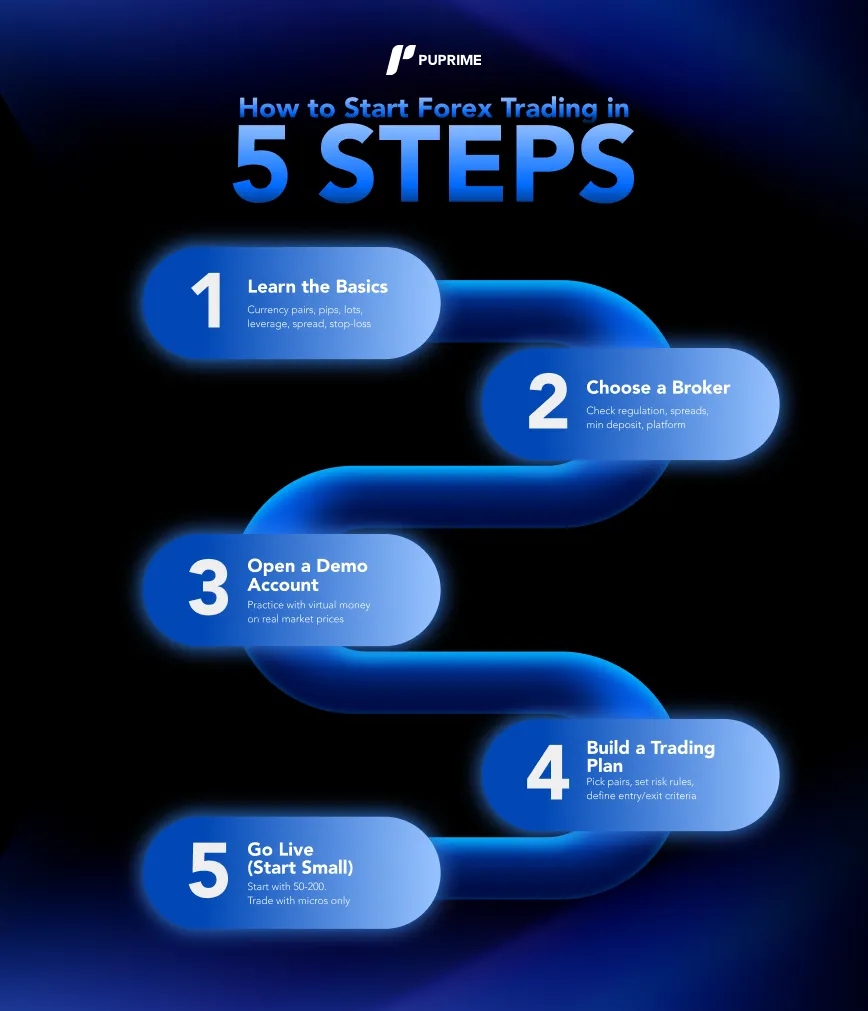
Forex, or foreign exchange, is the largest financial market in the world. Trillions of dollars change hands every day as traders buy and sell currencies. For beginners, it can seem complex and intimidating. But with the right foundation, anyone can learn to trade forex responsibly. How to start trading forex: a complete beginner's guide will walk you through the essential steps, from understanding the basics to placing your first trade with confidence.
Understand What Forex Trading Is
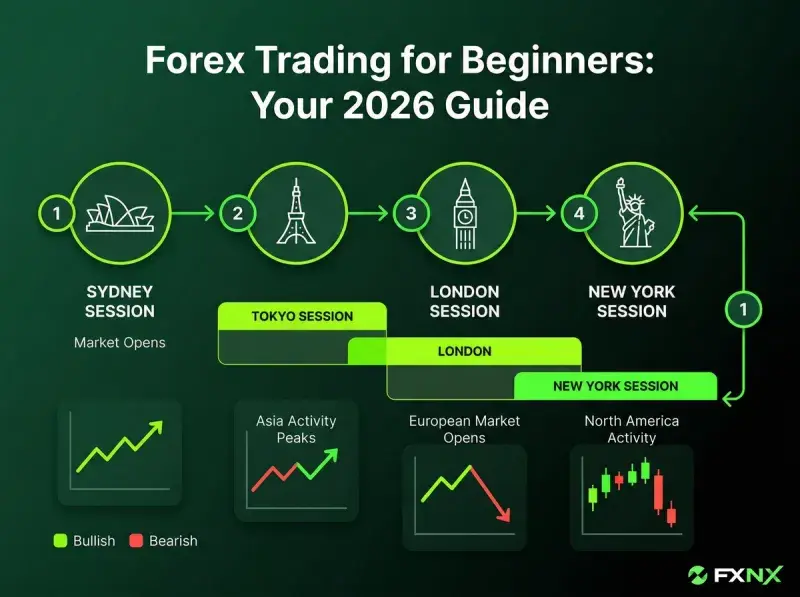
Forex trading means buying one currency while selling another. Currencies are traded in pairs, such as EUR/USD or GBP/JPY. When you buy a pair, you are betting that the first currency will rise in value against the second. The market operates 24 hours a day, five days a week, across major financial centers worldwide. Understanding these basics is the first step before risking any real money.
Learn Key Trading Terms
Before you trade, you need to speak the language. A pip is the smallest price move in a currency pair. The spread is the difference between the buy and sell price. Leverage allows you to control a large position with a small amount of capital, but it also magnifies losses. A lot is the standard unit size of a trade. Stop-loss and take-profit orders help you manage risk automatically. Mastering these terms makes everything else easier.
Choose a Regulated Broker
Your broker is your gateway to the market. Choose one that is regulated by a reputable financial authority. Check their spreads, commission fees, minimum deposit requirements, and available trading platforms. Popular platforms like MetaTrader 4 and MetaTrader 5 are user-friendly and widely supported. Read reviews and test their customer support before committing your funds. A trustworthy broker protects your money and provides the tools you need.
Open a Demo Account First
Never risk real money until you have practiced. A demo account lets you trade with virtual funds using real market prices. This is where you learn how the platform works, test strategies, and understand how trades are executed. Spend at least a few weeks on a demo account. Treat it seriously. The habits you build here will carry over when you trade with real capital.
Develop a Trading Plan
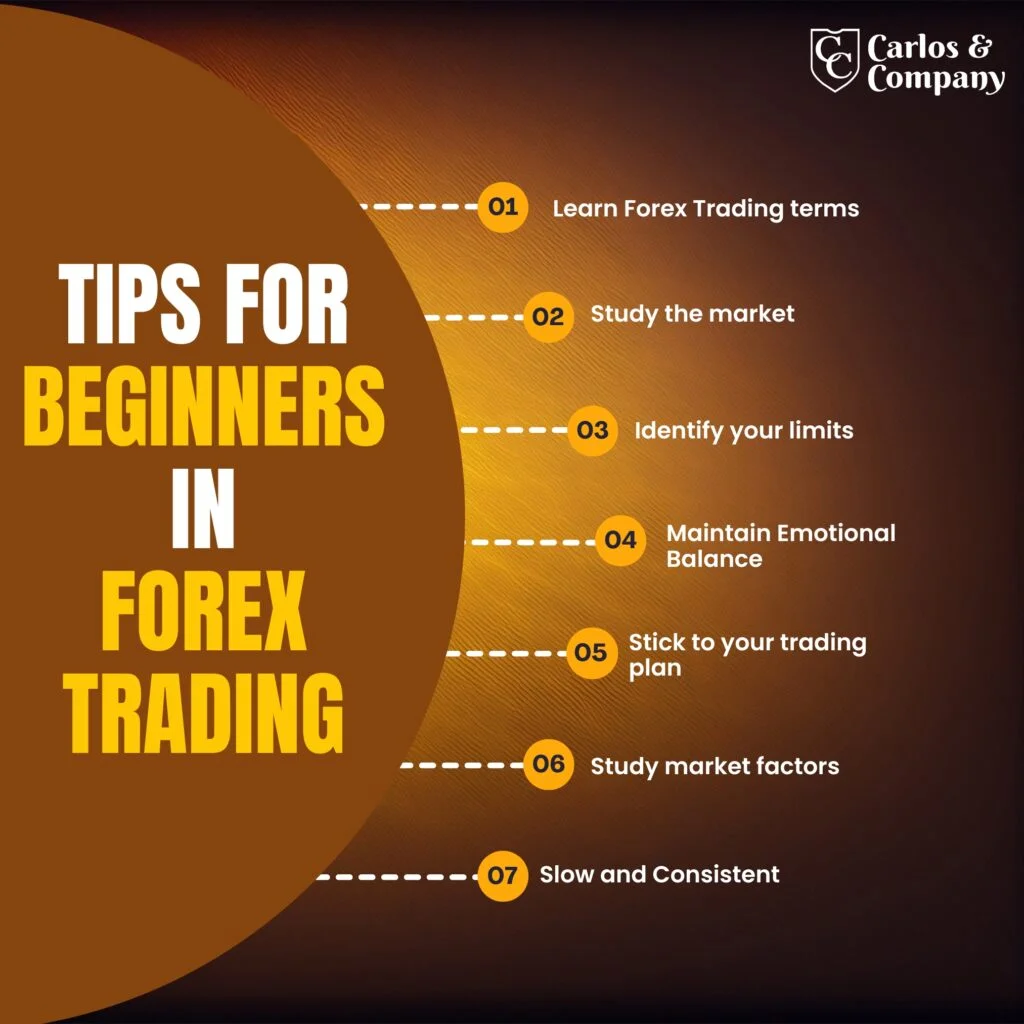
Successful traders do not make random decisions. They follow a plan. Your trading plan should define which currency pairs you will trade, your risk per trade, your entry and exit rules, and your daily or weekly goals. Write it down and stick to it. A plan removes emotion from trading and keeps you disciplined when the market gets volatile.
Master Risk Management
Risk management is what separates profitable traders from those who blow their accounts. Never risk more than one to two percent of your account on a single trade. Always use stop-loss orders to limit potential losses. Avoid over-leveraging, even if your broker offers high ratios. Protecting your capital is more important than chasing big wins. A trader who manages risk well can survive long enough to become consistently profitable.
Learn Technical and Fundamental Analysis
Technical analysis involves reading price charts, identifying trends, and using indicators like moving averages and support and resistance levels. Fundamental analysis focuses on economic news, interest rates, and geopolitical events that move currency prices. Most successful traders use a combination of both. Start with the basics, practice on demo, and gradually build your analytical skills.
Start Small and Scale Gradually
When you move from demo to live trading, start with the smallest position sizes possible. Micro lots allow you to experience real emotions and real market conditions without risking significant capital. Focus on consistency, not big profits. As your skills and confidence grow, you can gradually increase your position sizes. Patience is the most underrated trait in forex trading.
🌍 Forex Market Sessions & Trading Hours
📊 Choose Your Trading Style
📈 Forex Market at a Glance
💡 Essential Tips for Forex Beginners
✅ Before You Place Your First Live Trade:
Final Thoughts
How to start trading forex: a complete beginner's guide is not a shortcut to overnight riches. Forex trading is a skill that takes time, discipline, and continuous learning to master. Focus on education first, practice on demo accounts, manage your risk religiously, and treat trading as a business, not a gamble. The traders who succeed are not the ones who take the biggest risks. They are the ones who survive long enough to learn, adapt, and grow. Start small, stay patient, and let consistency be your edge.

.jfif)
.jfif)
0 Comments